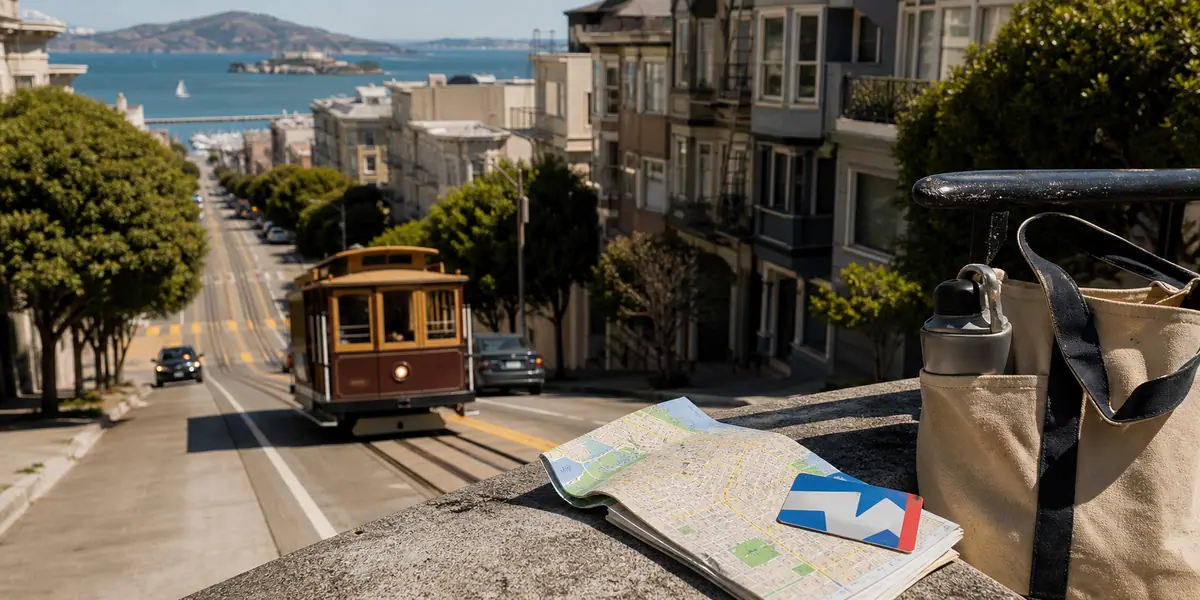
San Francisco gets much better when you stop treating every famous neighborhood as if it belongs in the same day.
Quick read
Key takeaways
- San Francisco gets easier when one zone or district is allowed to anchor the trip.
- First-timers get San Francisco wrong when people overbook icons and underbook geography.
- Geography shapes the feel of the weekend more than first-time visitors expect.
- Protect the plan that groups geography before ambition. That is the version people actually want to repeat.
Turn this read into a trip
Start planning San Francisco
If this guide is pointing you toward San Francisco, jump into the destination guide for itinerary ideas, stays, restaurants, and a faster next step.
Plan with fewer surprises
Practical notes from the related destination guide
Use these guide details to shape the trip, then confirm operational information with the linked official source before you go.
San Francisco
Typical stay: 3 to 5 days · Getting around: mixed
- Pack one extra layer even in warmer months because the wind and fog can change the whole feel of the day.
- Build each day by district and avoid unnecessary cross-city jumps just because two places look close on a map.
Guide note: Fly into SFO or OAK and expect a mixed transportation rhythm: Muni, BART, cable cars, and walking work well for many days, but hills, weather, and cross-city jumps still reward a little planning.
Official Golden Gate Bridge Welcome Center informationOpen the San Francisco guideWhere to go next
Open the destination guides behind this guide.
Use the full destination pages when you are ready to move from advice into actual trip shaping.

Why geography matters this much in San Francisco
Most weak versions of San Francisco have the same problem. Too many co-stars, not enough lead role. San Francisco needs one side of town per day if you want the mood to survive the logistics.
What trips people up is treating every iconic area like it belongs in the same day and letting hills, weather, and transit quietly drain the trip. 3 to 5 days is the range where San Francisco stops feeling skimmed and starts feeling like a real stay.
Destinations like San Francisco become much easier once you stop pretending the whole map deserves equal attention. The right neighborhood feels helpful again at the end of the plan, not just appealing at the start.
This sounds right on paper and still ends up being the wrong call for a lot of people. Here, the plan that groups geography before ambition should survive the edit before the version pretending icons share the same casual day does.
- Respect the map. The plan that groups geography before ambition is the better bet.
If you only keep one idea from this guide
Pick one main thing in San Francisco and build around it. San Francisco needs one side of town per day if you want the mood to survive the logistics.
If you are torn, give the prime hours to Golden Gate Bridge Welcome Center, build the meal around Tartine Manufactory, and let Mission District and Valencia Corridor stay optional unless the first part of the city day still feels strong.
- Go this route if travelers willing to let geography make the decisions.
- Not for travelers who plan like the hills and transit are minor details.
- Guard this part. San Francisco needs one side of town per day if you want the mood to survive the logistics.
- A smart day shape is simple. Start with Golden Gate Bridge Welcome Center, eat around Tartine Manufactory, and only then decide whether Mission District and Valencia Corridor has earned the second move.
- Editor's call is simple. Keep the plan that groups geography before ambition. Cut the version pretending icons share the same casual day first.
Quick city planner
The version of San Francisco I would choose gives Golden Gate Bridge Welcome Center the prime hours, Tartine Manufactory the meal, and leaves the rest of the whole stretch optional.
- The best first move is simple. Start with Golden Gate Bridge Welcome Center.
- The best reset move is simple. Leave room for a real meal around Tartine Manufactory.
- Do not force the second move if the first one already made the whole stretch.
- Watch for this first. The map gets treated like a suggestion instead of the real challenge.
- A better reset is simple. San Francisco needs one side of town per day if you want the mood to survive the logistics.
What shifts once the trip is actually happening
North Beach and the Northern Waterfront, Mission District and Valencia Corridor, and Golden Gate Park and the West Side do different jobs. San Francisco gets cleaner once you stop asking all of them to share the same day evenly.
A better day gives Golden Gate Bridge Welcome Center the prime hours, lets lunch or dinner revolve around Tartine Manufactory and Plow, and Alcatraz Island stays optional instead of mandatory.
The part people underestimate is this: the map gets treated like a suggestion instead of the real challenge. Plan around that first, then let the rest follow. San Francisco needs one side of town per day if you want the mood to survive the logistics.
- If one stop gets the real block of time, let it be Golden Gate Bridge Welcome Center.
- North Beach and the Northern Waterfront and Mission District and Valencia Corridor both deserve attention, but not in the same rushed half-day.
- If you are flying, start by pricing SFO and OAK, then expect a mixed transportation rhythm. Muni, BART, cable cars, and walking work well for many days, but hills, weather, and cross-city jumps still reward a little planning
What the place asks from you in real life
The day often turns on one practical truth. The map gets treated like a suggestion instead of the real challenge. People rarely plan for that part clearly enough.
The avoidable first-timer mistake is simple. People overbook icons and underbook geography. The local fix is simpler. San Francisco needs one side of town per day if you want the mood to survive the logistics.
The right neighborhood feels helpful again at the end of the city day, not just appealing at the start. The city gets easier to like once you stop trying to flatten it. Respect the map.
- The first-timer mistake is people overbook icons and underbook geography.
- San Francisco needs one side of town per day if you want the mood to survive the logistics.
- The city gets easier to like once you stop trying to flatten it.
- Respect the map.
The mistake people regret fastest
The regret shows up when the hills and transit expose a fake easy itinerary. Ask yourself if you are planning the plan that groups geography before ambition or the version pretending icons share the same casual day.
Respect the map. One side of town per day is the adult answer.
When the explanation starts doing more work than the itinerary, that is your answer. This sounds right on paper and still ends up being the wrong call for a lot of people.
Here, the plan that groups geography before ambition should survive the edit before the version pretending icons share the same casual day does.
- The regret arrives when the hills and transit expose a fake easy itinerary.
- Skip the version pretending icons share the same casual day.
- Keep the plan that groups geography before ambition at the center of the trip.
What your base should make easier twice
When one neighborhood or zone is allowed to anchor the stay, decisions start compounding in a good way. Meals connect more naturally, transitions feel smaller, and the city starts to click.
That is better than chasing perfect coverage. Don't ping-pong between North Beach and the Northern Waterfront and Mission District and Valencia Corridor just because both look good on the map.
Commit to the side that makes the day simpler. Golden Gate Bridge Welcome Center reads better when the rest of the day keeps the focus on North Beach and the Northern Waterfront or Mission District and Valencia Corridor instead of trying to touch everything at once.
The real planning trick is to stop pretending that crossing town is neutral. In a place like San Francisco, travel time changes mood, appetite, and how much spontaneity is left once you arrive.
The weaker version shows up when the map gets treated like a suggestion instead of the real challenge. Do not ping-pong between North Beach and the Northern Waterfront and Mission District and Valencia Corridor just because both look good on the map. Pick the side that fits the city day and let it lead. Golden Gate Bridge Welcome Center comes together better when the rest of the city day stays anchored in North Beach and the Northern Waterfront or Mission District and Valencia Corridor instead of trying to touch everything at once. If you try to force Golden Gate Bridge Welcome Center, North Beach and the Northern Waterfront, and Mission District and Valencia Corridor into the same loose block, you will mostly remember the transitions.
If you're torn, take the option that reduces second-guessing later in the plan. That means keeping the plan that groups geography before ambition at the center. This is the part people tend to notice only after they are already committed.
What a good San Francisco base prevents
Choose a base that makes your version of San Francisco easy to repeat without one extra uphill reset or cross-city detour every day.
The best district is the one that makes your version of San Francisco easiest to repeat, not the one that looks most central on a map. San Francisco needs one side of town per day if you want the mood to survive the logistics.
Pack one extra layer even in warmer months because the wind and fog can change the whole feel of the city day
How to keep transit from eating the day
The easiest version of a spread-out city is built in clusters. Group one or two neighborhoods, one meal, and one view or activity that naturally live near each other, then stop.
The day feels bigger when you are not constantly resetting in transit. Golden Gate Bridge Welcome Center comes together better when the rest of the city day stays anchored in North Beach and the Northern Waterfront or Mission District and Valencia Corridor instead of trying to touch everything at once.
That approach is especially important on shorter trips, when a badly placed lunch or one extra cross-city jump can quietly erase the rest of the afternoon. The weaker version shows up when the map gets treated like a suggestion instead of the real challenge.
- Build days by side of city, not by list order.
- Treat crossing town as the main event of that block, not an afterthought between other plans.
- Skip the version pretending icons share the same casual day if you want the trip to keep its shape.
What repeat visitors figure out faster
People who really enjoy San Francisco stop fighting its geography.
A surprising amount of trip frustration traces back to pretending the city's icons all belong in the same easy day.
- Skip packing hills, cross-town transit, and too many landmarks into one itinerary block. If it pulls the trip off center.
- If you upgrade one thing, make it using the budget on the base or one high-payoff experience that reduces logistical drag.
- San Francisco improves when each day stays mostly on one side of town.
What to skip, what is overrated, and what is worth planning ahead
The easy trap in San Francisco is building a trip that reads well before it actually works well.
The better answer is often to remove the parts that do not deepen the version of San Francisco you actually came for.
- Skip forcing one more famous hill or icon into a day that is already geographically full.
- Packing hills, cross-town transit, and too many landmarks into one itinerary block.
- If you book one thing early, make it the base or one high-payoff experience that reduces logistical drag.
- Leave room for the block that should absorb mood, weather, recovery, or the better-than-expected neighborhood moment.
- For a first night, a compact dinner-and-neighborhood walk that helps the hills and temperature calibrate your expectations.
Keep planning
Read What Part of San Francisco Should Anchor Your Stay?
This guide pairs well with the section you just read and gives you another concrete next step instead of leaving the planning half-finished.
Open related guideWhat people get wrong
The most common mistake is trying to make every good idea fit into the same trip. That produces a version of San Francisco that is busier, flatter, and less personal than it needs to be.
The better trip comes from choosing what deserves real emphasis and letting the rest support it instead of compete with it.
- Don't turn optional ideas into obligations just because they look good on a list.
- Let one clear priority shape the best hours of the whole stretch.
- If the itinerary starts reading like proof of effort, simplify it.