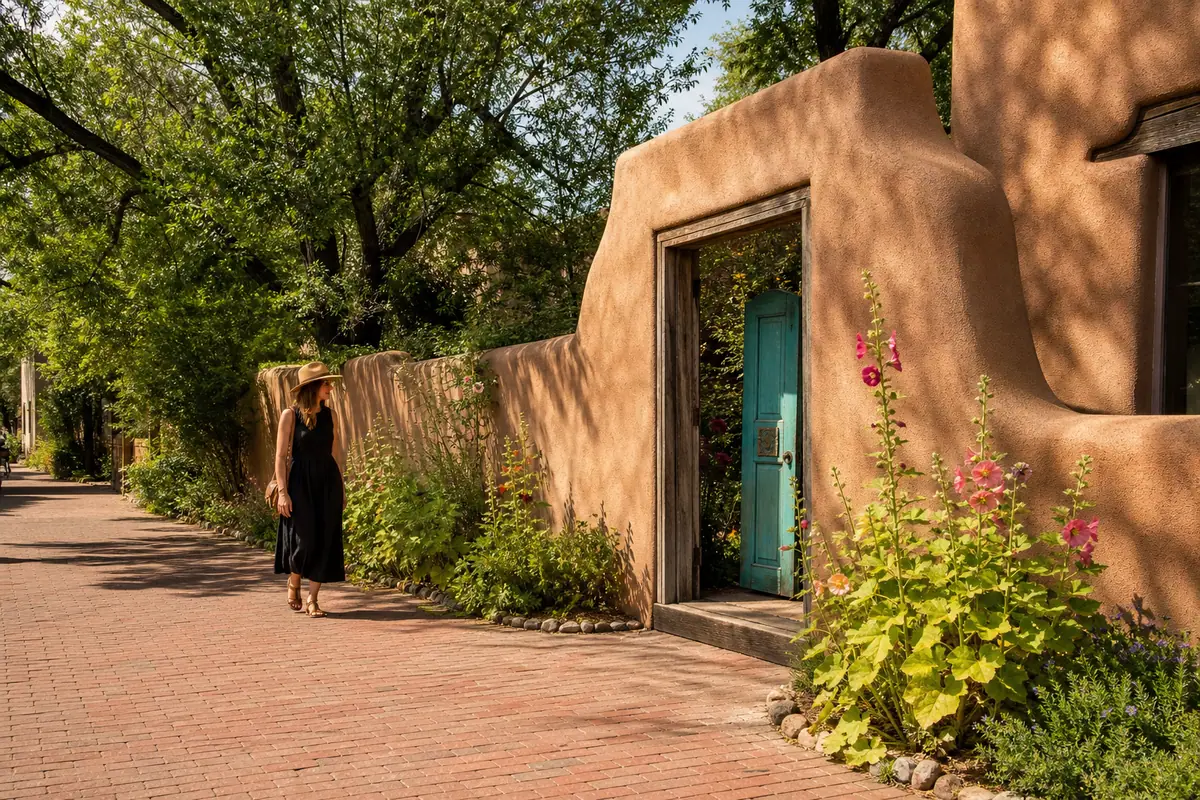
Santa Fe gets flatter when every museum, gallery block, and scenic add-on is asked to prove itself in the same stay.
Quick read
Key takeaways
- The best version of Santa Fe leaves room for recovery, appetite, and contrast.
- The usual mistake is pretending every good option in Santa Fe deserves airtime. It does not.
- One well-paced day delivers more than two overloaded ones.
- When it clicks, Santa Fe feels specific, easy to understand, and much stronger than the diluted version most first drafts create.
Turn this read into a trip
Start planning Santa Fe
If this guide is pointing you toward Santa Fe, jump into the destination guide for itinerary ideas, stays, restaurants, and a faster next step.
Plan with fewer surprises
Practical notes from the related destination guide
Use these guide details to shape the trip, then confirm operational information with the linked official source before you go.
Santa Fe
Typical stay: 3 to 4 days · Getting around: mixed
- Book dinner reservations ahead for a notable Santa Fe tables, especially on weekends and during market season.
- Treat altitude and dry air like real planning factors by hydrating early and not overstacking the first afternoon.
Guide note: Santa Fe is easiest when you stay close enough to the Plaza or Canyon Road to walk part of the day, then use short drives or rideshares for Museum Hill, Ten Thousand Waves, and farther-out meals.
Official Santa Fe Plaza informationOpen the Santa Fe guideWhere to go next
Open the destination guides behind this guide.
Use the full destination pages when you are ready to move from advice into actual trip shaping.

Where people overload this trip
Santa Fe gets better once one priority is allowed to run the plan instead of competing with everything else. Santa Fe does best when one cultural anchor leads and the rest of the day stays loose.
3 to 4 days is the range where Santa Fe stops feeling skimmed and starts feeling like a real stay. In destinations like Santa Fe, the problem is not lack of options. It is the temptation to treat all good options as mandatory.
A neat comparison can still hide the weaker real-life choice. Here, the plan that lets art, food, and the high-desert pace reinforce each other should survive the edit before the version chasing coverage over mood does.
- Try not to turn Santa Fe into a gallery errand list. The version chasing coverage over mood is the part to drop first.
If you only keep one idea from this guide
Pick one main thing in Santa Fe and build around it. Santa Fe is strongest when one cultural anchor leads and the rest of the day stays unhurried.
If you are torn, give the prime hours to Santa Fe Plaza, build the meal around Cafe Pasqual’s, and let Canyon Road and Eastside stay optional unless the first part of the day still feels strong.
- This works best for travelers who want culture, food, and mood to share the trip instead of compete.
- This disappoints if travelers who only trust trips that move fast and change neighborhoods constantly.
- Keep this intact. Santa Fe comes off best when one cultural anchor leads and the rest of the day does not get crowded.
- A stronger town day shape is simple. Start with Santa Fe Plaza, eat around Cafe Pasqual’s, and only then decide whether Canyon Road and Eastside has earned the second move.
- Editor's call is simple. Keep the plan that lets art, food, and the high-desert pace reinforce each other. Cut the version chasing coverage over mood first.
Quick town planner
The best version of Santa Fe comes from giving Santa Fe Plaza the clean block, Cafe Pasqual’s the long meal slot, and the rest of the day permission to stay selective.
- The best first move is simple. Start with Santa Fe Plaza.
- The best reset move is simple. Leave room for a real meal around Cafe Pasqual’s.
- Try not to force the second move if the first one already made the day.
- Watch for this first. The plan keeps making every museum and gallery district compete for the same short window.
- A better reset is simple. Santa Fe holds up best when one cultural anchor leads and the rest of the day keeps its breathing room.
What the place feels like in real life
Plaza and Downtown, Canyon Road and Eastside, and Railyard and Guadalupe are not interchangeable. Each one pushes the day in a different direction, so Santa Fe works better when one area gets to lead.
The stronger move is to start with Santa Fe Plaza, put the meal somewhere with a real sense of place like Cafe Pasqual’s and Clafoutis, and only then adds Canyon Road Galleries if there is still energy for it.
One local friction point worth planning around is simple. The plan keeps making every museum and gallery district compete for the same short window. The better rule here is Santa Fe comes off best when one cultural anchor leads and the rest of the day does not get crowded.
- If one signature anchor gets the real block, make it Santa Fe Plaza.
- It helps not to split the same half-day between Plaza and Downtown and Canyon Road and Eastside unless the contrast is the whole point. Most of the time, that just burns energy.
- Santa Fe is easiest when you stay close enough to the Plaza or Canyon Road to walk part of the day, then use short drives or rideshares for Museum Hill, Ten Thousand Waves, and farther-out meals
What starts mattering once the trip is real
Santa Fe starts feeling off when the plan keeps making every museum and gallery district compete for the same short window. People do not see that coming when they book, but it changes how the trip feels.
A lot of first trips wobble for the same reason. People underestimate how much Santa Fe wants slower meals and unhurried walking time. A more useful local rule is Santa Fe does best when one cultural anchor leads and the rest of the day stays loose.
The right base makes the Plaza, Canyon Road, and the dinner hour feel like one connected rhythm instead of separate missions. It gets better the moment the town is allowed to feel hushed instead of efficient. Avoid turn Santa Fe into a gallery errand list.
- The first-timer mistake is people underestimate how much Santa Fe wants slower meals and unhurried walking time.
- Santa Fe comes off best when one cultural anchor leads and the rest of the day does not get crowded.
- It gets better the moment the town is allowed to feel hushed instead of efficient.
- Don't turn Santa Fe into a gallery errand list.
The mistake people regret fastest
People regret booking Santa Fe for atmosphere and then scheduling it like a museum rush. Ask yourself if you are planning the plan that lets art, food, and the high-desert pace reinforce each other or the version chasing coverage over mood.
Try not to turn Santa Fe into a gallery errand list. One cultural anchor, one long meal, one slower slow walking stretch is the better shape.
If a plan needs a long defense before you book it, it is probably the wrong plan here. Roundup logic is how people talk themselves into the weaker real-life pick.
Here, the plan that lets art, food, and the high-desert pace reinforce each other should survive the edit before the version chasing coverage over mood does.
- People regret booking Santa Fe for atmosphere and then scheduling it like a museum rush.
- Skip the version chasing coverage over mood.
- Keep the plan that lets art, food, and the high-desert pace reinforce each other at the center of the trip.
How to keep the energy curve healthy
A better plan gives one or two anchor moments real space and lets the rest of the day stay supportive rather than equally high intensity. Lead with Santa Fe Plaza. Let Canyon Road Galleries be the second move, not a rushed afterthought.
That can mean slower mornings, fewer forced transitions, and one night that is intentionally lighter so the next big moment still lands.
The experienced-traveler move is to protect one easy morning or one lighter evening before you feel you need it. In places with lots of temptation, recovery comes off best when it is planned, not improvised after everyone is already worn down.
If you're torn, take the option that reduces second-guessing later in the day. In real life, the plan that lets art, food, and the high-desert pace reinforce each other is the plan that still holds up. You can feel the difference by late afternoon.
What a better pace gives you
You remember more, enjoy more, and spend more intelligently when the trip still has appetite left in it.
September to November and March to May is the cleanest window for getting Santa Fe in the form people actually picture when they book it.
What seasoned travelers do differently
People who enjoy Santa Fe most rarely treat every day like a final exam. They front-load less, protect appetite, and leave room for one walk, one view, or one drink to matter more than a crowded schedule.
That restraint pays off because Santa Fe still has room to feel atmospheric instead of merely consumed. Lead with Santa Fe Plaza.
Let Canyon Road Galleries be the second move, not a rushed afterthought. When it clicks, Santa Fe feels specific, easy to understand, and much stronger than the diluted version most first drafts create.
- Schedule your biggest night and your biggest daytime plan on different days when possible.
- Use slower mornings or one lower-stakes dinner to preserve the trip's energy curve.
- If tickets or reservations are involved, keep at least one flexible block around them rather than filling every gap.
What repeat visitors figure out faster
People who really love Santa Fe stop trying to make every day prove how much culture they fit in.
The thinner version begins with planning it like a box-checking arts town instead of a slower place with strong atmosphere.
- Skip trying to cover every museum hill, gallery block, and day trip in the same short stay. If it pulls the trip off center.
- If you upgrade one thing, make it using the budget on the stay, spa, or the evening table that deepens the Santa Fe mood instead of adding more movement.
- Santa Fe gets easier when the Plaza side, Canyon Road side, and Museum Hill side are grouped instead of cross-wired.
What to skip, what is overrated, and what is worth planning ahead
Santa Fe often disappoints for the same reason. The broad itinerary sounds stronger than the day itself feels.
Most of the improvement comes from trimming what does not support the real reason you picked Santa Fe.
- Skip trying to cover every museum hill, gallery block, and day trip in the same short stay.
- Trying to cover every museum hill, gallery block, and day trip in the same short stay.
- If you book one thing early, make it the stay, spa, or dinner that deepens the Santa Fe mood instead of adding more movement.
- Leave room for the block that should absorb mood, weather, recovery, or the better-than-expected part of town moment.
- For a first night, one easy arrival move that reinforces the town's rhythm instead of testing your stamina.
Keep planning
Read How Many Days Do You Need in Santa Fe?
This guide pairs well with the section you just read and gives you another concrete next step instead of leaving the planning half-finished.
Open related guideWhat people get wrong
The most common mistake is trying to make every good idea fit into the same trip. That produces a version of Santa Fe that is busier, flatter, and less personal than it needs to be.
The better trip comes from choosing what deserves real emphasis and letting the rest support it instead of compete with it.
- Try not to turn optional ideas into obligations just because they look good on a list.
- Let one clear priority shape the best hours of the day.
- If the itinerary starts reading like proof of effort, simplify it.