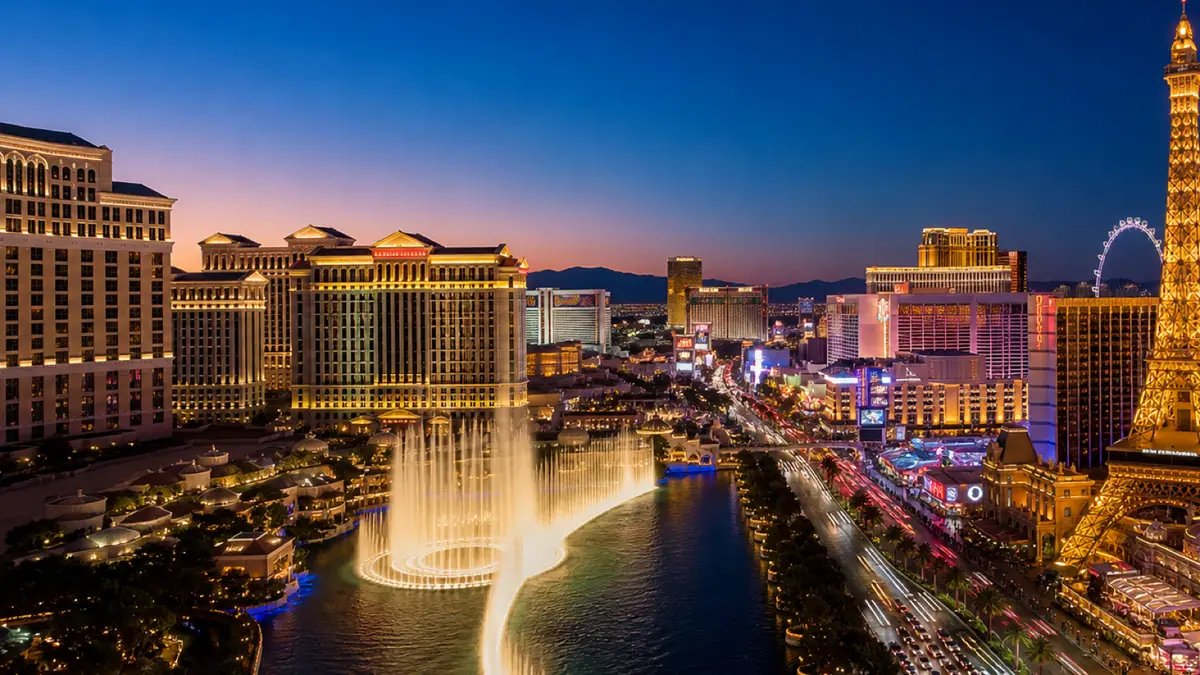
Las Vegas works best when you pace the excess instead of trying to live at maximum volume from arrival onward.
Quick read
Key takeaways
- The best version of Las Vegas leaves room for recovery, appetite, and contrast.
- The trap is overcommitting to nonstop spectacle and forgetting that Vegas is more fun when you pace the indulgence.
- One well-paced day delivers more than two overloaded ones.
- When it clicks, Las Vegas feels theatrical, easy to dip in and out of, and more varied than the casino stereotype suggests.
Turn this read into a trip
Start planning Las Vegas
If this guide is pointing you toward Las Vegas, jump into the destination guide for itinerary ideas, stays, restaurants, and a faster next step.
Plan with fewer surprises
Practical notes from the related destination guide
Use these guide details to shape the trip, then confirm operational information with the linked official source before you go.
Las Vegas
Typical stay: 3 to 4 days · Getting around: mixed
- Do not underestimate indoor walking distances between Strip hotels.
- Reserve headline restaurants and shows before building the evening around them.
Guide note: Fly into LAS and stay fairly central; this visit usually works best with walking, short rideshares, and only occasional transit or parking decisions.
Official Fremont Street Experience informationOpen the Las Vegas guideWhere to go next
Open the destination guides behind this guide.
Use the full destination pages when you are ready to move from advice into actual trip shaping.

Where people overload this trip
Las Vegas gets better once one priority is allowed to run the plan instead of competing with everything else. The best Vegas nights are prepared for by a lighter afternoon, not a louder one.
The trap is overcommitting to nonstop spectacle and forgetting that Vegas is more fun when you pace the indulgence. 3 to 4 days is the range where Las Vegas stops feeling skimmed and starts feeling like a real stay.
In destinations like Las Vegas, the problem is not lack of options. It is the temptation to treat all good options as mandatory.
Paper balance is a bad reason to keep a weaker plan alive. Here, that means cutting the version with full volume from check-in to checkout before you cut the plan that spends bigger only where it changes the night.
- Do not try to win Vegas. The version with full volume from check-in to checkout is the part to drop first.
If you only keep one idea from this guide
Pick one main thing in Las Vegas and build around it. The best Vegas nights are prepared for by a lighter afternoon, not a louder one.
If you are torn, give the prime hours to Downtown Arts District, build the meal around Esther's Kitchen, and let Downtown Vegas & Fremont Street stay optional unless the first part of the day still feels strong.
- This works best for travelers who want one or two peak nights and know recovery matters.
- This disappoints if travelers trying to keep the trip at max intensity.
- Keep this intact. The best Vegas nights are prepared for by a lighter afternoon, not a louder one.
- A smart day shape is simple. Start with Downtown Arts District, eat around Esther's Kitchen, and only then decide whether Downtown Vegas & Fremont Street has earned the second move.
- Editor's call is simple. Keep the plan that spends bigger only where it changes the night. Cut the version with full volume from check-in to checkout first.
Quick weekend planner
In Las Vegas, give Downtown Arts District real time, eat at Esther's Kitchen, and keep the rest light.
- The best first move is simple. Start with Downtown Arts District.
- The best reset move is simple. Leave room for a real meal around Esther's Kitchen.
- Don't force the second move if the first one already made the day.
- Watch for this first. Travelers start chasing every flashy upgrade instead of protecting appetite and recovery.
- A better reset is simple. The best Vegas nights are prepared for by a lighter afternoon, not a louder one.
What actually changes once you are there
The Strip, Downtown Vegas & Fremont Street, and Off-Strip Neighborhoods do different jobs. Las Vegas gets cleaner once you stop asking all of them to share the same day evenly.
A better day gives Downtown Arts District the prime hours, lets lunch or dinner revolve around Esther's Kitchen and Best Friend, and Fremont Street Experience stays optional instead of mandatory.
The part people underestimate is this: travelers start chasing every flashy upgrade instead of protecting appetite and recovery. Plan around that first, then let the rest follow. The best Vegas nights are prepared for by a lighter afternoon, not a louder one.
- If one stop gets the real block of time, let it be Downtown Arts District.
- The Strip and Downtown Vegas & Fremont Street both deserve attention, but not in the same rushed half-day.
- Fly into LAS and stay fairly central; this visit is easiest with walking, short rideshares, and only occasional transit or parking decisions
What starts mattering once the trip is real
Las Vegas starts feeling off when travelers start chasing every flashy upgrade instead of protecting appetite and recovery. People do not see that coming when they book, but it changes how the trip feels.
A lot of first trips wobble for the same reason. People overspend on luxury they only notice once. A more useful local rule is the best Vegas nights are prepared for by a lighter afternoon, not a louder one.
Being slightly better positioned on the Strip can matter more than a more impressive room. Vegas gets less fun the second the evening starts feeling mandatory. Do not try to win Vegas.
- The first-timer mistake is people overspend on luxury they only notice once.
- The best Vegas nights are prepared for by a lighter afternoon, not a louder one.
- Vegas gets less fun the second the evening starts feeling mandatory.
- Do not try to win Vegas.
The mistake people regret fastest
People regret the mandatory-fun version fast. Ask yourself if you are planning the plan that spends bigger only where it changes the night or the version with full volume from check-in to checkout.
Do not try to win Vegas. The best nights are set up by a lighter afternoon.
If a plan needs a long defense before you book it, it is probably the wrong plan here. Roundup logic is how people talk themselves into the weaker real-life pick.
Here, that means cutting the version with full volume from check-in to checkout before you cut the plan that spends bigger only where it changes the night.
- People regret the mandatory-fun version fast.
- Skip the version with full volume from check-in to checkout.
- Keep the plan that spends bigger only where it changes the night at the center of the trip.
How to keep the energy curve healthy
A better plan gives one or two anchor moments real space and lets the rest of the day stay supportive rather than equally high intensity. Lead with Downtown Arts District. Let Fremont Street Experience be the second move, not a rushed afterthought.
That can mean slower mornings, fewer forced transitions, and one night that is intentionally lighter so the next big moment still lands.
The experienced-traveler move is to protect one easy morning or one lighter evening before you feel you need it. In places with lots of temptation, recovery comes off best when it is planned, not improvised after everyone is already worn down.
Pick the version you would still be happy to repeat on a slightly tired day. In real life, the plan that spends bigger only where it changes the night is the plan that still holds up. The mood often turns on a much smaller decision than people expect.
What a better pace gives you
You remember more, enjoy more, and spend more intelligently when the trip still has appetite left in it.
March to May and October to November is the cleanest window for getting Las Vegas in the form people actually picture when they book it.
What seasoned travelers do differently
People who enjoy Las Vegas most rarely treat every day like a final exam. They front-load less, protect appetite, and leave room for one walk, one view, or one drink to matter more than a crowded schedule.
That restraint pays off because Las Vegas still has room to feel atmospheric instead of merely consumed. Lead with Downtown Arts District.
Let Fremont Street Experience be the second move, not a rushed afterthought. When it clicks, Las Vegas feels theatrical, easy to dip in and out of, and more varied than the casino stereotype suggests.
- Schedule your biggest night and your biggest daytime plan on different days when possible.
- Use slower mornings or one lower-stakes dinner to preserve the trip's energy curve.
- If tickets or reservations are involved, keep at least one flexible block around them rather than filling every gap.
What repeat visitors figure out faster
The Vegas travelers having the best time are often the ones who pace their indulgence instead of trying to win it.
The thinner version begins with trying to live at full volume from arrival to departure.
- Skip paying top dollar for luxury touches that do not meaningfully improve comfort, access, or recovery. If it pulls the trip off center.
- If you upgrade one thing, make it using the budget on one upgrade you will feel repeatedly, like location, a standout meal, or a room that resets well.
- Strip geography matters more than newcomers think, especially once feet, heat, and late nights start stacking up.
What to skip, what is overrated, and what is worth planning ahead
Las Vegas often disappoints for the same reason. The broad itinerary sounds stronger than the day itself feels.
Most of the improvement comes from trimming what does not support the real reason you picked Las Vegas.
- Skip paying top dollar for luxury touches that do not meaningfully improve comfort, access, or recovery.
- Paying top dollar for luxury touches that do not meaningfully improve comfort, access, or recovery.
- If you book one thing early, make it one upgrade you will feel repeatedly, like location, a standout meal, or a room that resets well.
- Leave room for the block that should absorb mood, weather, recovery, or the better-than-expected neighborhood moment.
- For a first night, one easy arrival move that reinforces the city's rhythm instead of testing your stamina.
Keep planning
Read When Las Vegas Is Worth the Splurge
This guide pairs well with the section you just read and gives you another concrete next step instead of leaving the planning half-finished.
Open related guideWhat people get wrong
The most common mistake is trying to make every good idea fit into the same trip. That produces a version of Las Vegas that is busier, flatter, and less personal than it needs to be.
The better trip comes from choosing what deserves real emphasis and letting the rest support it instead of compete with it.
- Do not turn optional ideas into obligations just because they look good on a list.
- Let one clear priority shape the best hours of the day.
- If the itinerary starts reading like proof of effort, simplify it.